MISHKAT

MISHKAT

Mishkat-       A Scientific – Promotional Quarterly Journal, published by the Islamic Research Foundation in two fields of "the Qur’an and Hadith", and "Islamic History and Culture".


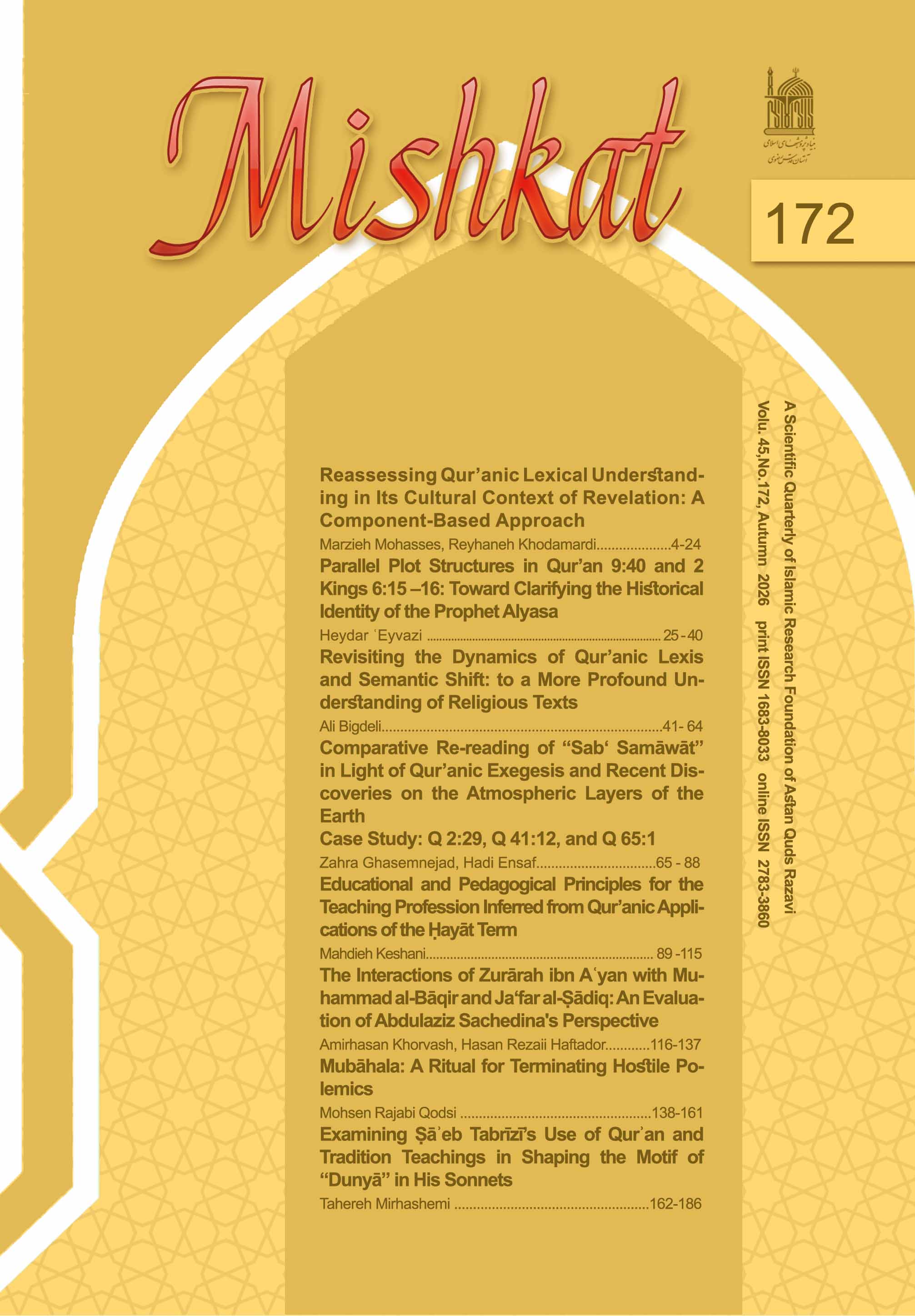
Current Issue: Volume 45, Issue 3 - Serial Number 172, Autumn 2026, Pages 4-186 

Indexing and Abstracting

Keywords Cloud

  • the Qur’ān
  • -
  • semantics
  • interpretation
  • Tradition
  • Holy Qur’an
  • faith
  • Islamic Civilization
  • Monotheism
  • Imam al-Rizā (A.S.)
  • the Qur\'an
  • Imam Ali (A.S.)
  • Imam ‘Alī (A.S.)
  • Nahj al-Balāgha
  • Nahj al-Balagha
  • Consumption
  • orientalists
  • Qur’an
  • Piety
  • Discourse Analysis
  • Qur\'an
  • an
  • the Qur’an
  • the Holy Qur’ān
  • Javadi Amoli
  • extravagance
  • ethics
  • Tafsīr al-Mīzān
  • moderation
  • Education
  • Imam Reza (A.S.)
  • context
  • Peace
  • Ma’mūn
  • psychology
  • Human dignity
  • miracle
  • disconnected letters
  • Islam
  • Sunnīs
  • jihād
  • resurrection
  • critical discourse analysis
  • self-compassion
  • Family Consolidation
  • hadīth
  • literary interpretation
  • Qur’anic verses
  • Lifestyle
  • spirit of the meaning
  • Islamic economy
  • Allah\'s countenance
  • good and evil
  • naqīb
  • Anger
  • Discourse
  • Christianity
  • single words of the Qur’ān
  • Responsibility
  • anxiety
  • human free will
  • Theoretical Principles
  • Ahl al-Bayt (A.S.)
  • Shrine of Sādāt
  • alms
  • religion
  • Evil
  • Argumentation
  • guardianship
  • Mishkāt
  • Unity
  • Qur&‌‌rsquo
  • principles of motivation
  • Cognitive Linguistics
  • Imamiyyah traditions
  • general meanings of the Qur’ān
  • Islamic doctrines
  • the Sunnīs
  • righteous people
  • beauty
  • action
  • Happiness
  • semantic inclusiveness
  • epistemic principles of the Qur’an
  • science and religion
  • Traditionalism
  • revelations of God
  • virtues
  • charity
  • allegory
  • sayyid
  • prophets and infallibles
  • consultation
  • tradition Discourse
  • Grounded theory
  • Rationalism
  • Death
  • Motivation
  • Divine justice
  • Angels
  • civilization studies
  • dignity
  • Balance
  • Western paradigm
  • Imam al-Riḍā (A.S.)
  • forty traditions
  • the clan’s culture
  • interpretive method
  • pattern
  • Qur’ānic studies
  • Not
  • thematic interpretation
  • Islamic ethics
  • Mashhad
  • Right
  • interdisciplinary studies
  • the Abbasids
  • divine attributes
  • hope
  • Behavior
  • Astan Quds Razavi Museum
  • Ḥasan b. Maḥbub
  • Lighting
  • Variant Readings
  • modernity
  • rulings verses
  • miraculous act
  • Verses and Traditions
  • Control
  • the unequivocal and the ambiguous
  • Knowledge
  • Qur&‌‌‌rsquo
  • revelation
  • poetry
  • Saints
  • Proportion
  • Innovation
  • comparative study
  • Foresight
  • Qur’ānic sciences
  • Sunnī traditions
  • exegetical traditions
  • exegetical methods
  • Tabādkān
  • migration of the sādāt
  • actions consequences
  • mental health
  • promise
  • the addressees of the Qur‘ān
  • history of interpretation
  • Justice
  • semantics of the Qur’ān
  • Surah Studies
  • Hypocrisy
  • comparative interpretation
  • Applied Ethics
  • countenance
  • methodology
  • hagiography
  • Alawī management
  • interpretation methodology
  • Sanctification
  • Semiotics
  • dissimulation
  • Historiography
  • Shrine of Imam al-Rizā (A.S.)
  • trust in God (tawakkul)
  • general validation
  • philosophy of lies
  • In this article
  • women in Islam
  • following the Ahl al-Bayt (A.S.)
  • critique of readings
  • Mind
  • privative speech indicator
  • family peace
  • Jurisprudential analysis
  • The story of Ezīr (ع), a symbolic tale in the Qur'
  • couple’s right
  • perfect faith
  • Shāhnāma
  • manifest
  • Linguistics
  • interpreters of the two major sects
  • methodology of the Qur’ān
  • Imam Sajjad’s (A.S.) supplication
  • afterlife states
  • Shawāhid al-Tanzīl li Qawā’id al-Tafzīl
  • sound hadīth
  • pause and beginning
  • Revelation ambience
  • origin of isnād
  • engraving
  • existential analysis
  • the pilgrims’ living expenses
  • practical and verbal shahādat
  • gates of Hell
  • the wisdom of the Qur’ān’s stories
  • individual deeds
  • exoneration