نوع مقاله : علمی _ پژوهشی
عنوان مقاله English
نویسنده English
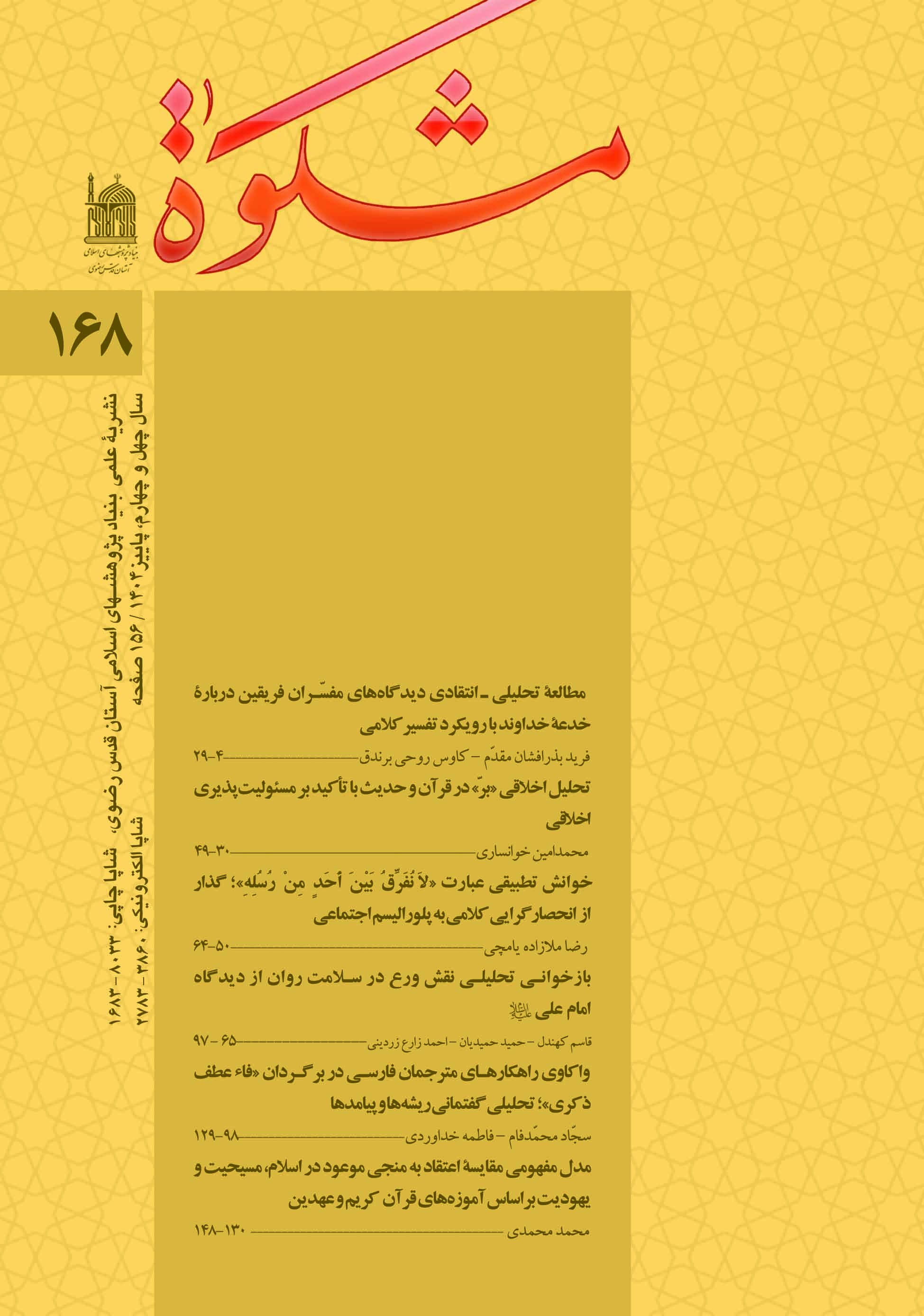
In the Islamic ethical system, righteousness is one of the fundamental concepts that is the root of charity and responsibility. The present study, using a descriptive-analytical method and emphasizing the Qur'an and Tradition, analyzes the moral and ethical dimensions of responsibility based on righteousness from Qur'an and Tradition perspective. Righteousness is not just a moral precept or individual virtue, but a comprehensive framework for human moral behavior towards God, society, and himself. The responsibility arising from righteousness and goodness is two-way, consisting of a negative duty (avoiding evil, oppression, transgression, and cooperation in sin) and a positive duty (actively realizing goodness, benevolence, defending the oppressed, and altruism). This responsibility has a wide range: from kindness to parents to supporting the needy, defending the oppressed, and adhering to the principles of social justice. Moral responsibility based on goodness and righteousness requires not only an understanding of priorities, but also an awareness of the circumstances, rights of others, and individual capacities. In ethics based on the Qur'an and Tradition, goodness is considered a conscious action that is staged and subject to a normative and value system; in the sense that goodness has special priorities towards parents, relatives and benefactors. In addition, the aforementioned concept has multiple normative criteria: utilitarian, virtuous and duty-oriented. In addition, the aforementioned concept has multiple normative criteria: utilitarian, virtuous, and deontological.
کلیدواژهها English